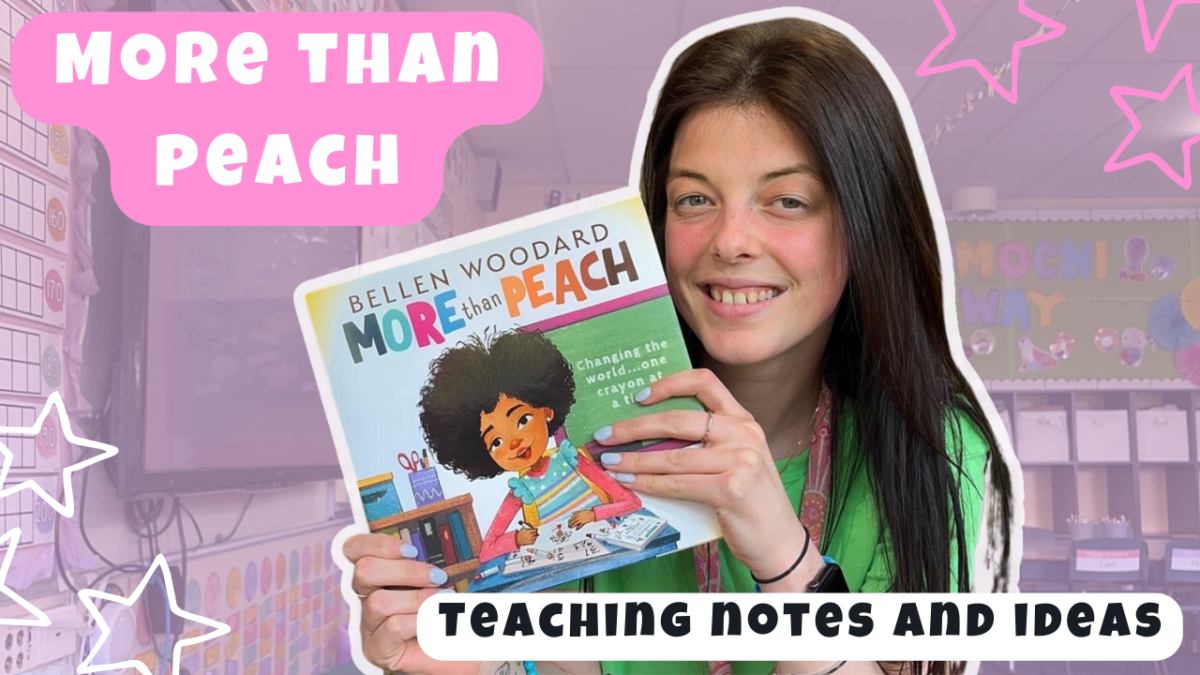
More Than Peach: Teaching Notes
“Can you pass the ‘skin colour’?” How many times have you heard this in your classroom?
I stumbled across this book @morethanpeachproject in the @scholastic_au book club, peaked my interest so I bought it & boy am I glad that I did!
This book has the most beautiful message about “skin colour” and coloured crayons. Bellen Woodard was only 8 years old when she started the @morethanpeachproject movement & my kids have been so inspired.
I have heard my students correcting each other when someone asks for the “skin colour’ pencil… the magic just one book can create!

My class and I had the best time reading this book and it is definitely going to be a staple text in my classroom throughout Diversity learning.
More Than Peach Lesson Plan:
Tuning In:
Invite your students to look at the cover of the book and ask the following questions:
- What do you notice on the front cover of this book?
- Where do you think she is? Why do you think that? What clues are there?
- Who do you think the character is?
- What do you notice about the word PEACH?
- What do you think this book could be about?
Read the text:
A friendly reminder to the read the book from start to finish without stopping the first time you read it. Sometimes we want to stop on every page and discuss different things however this can interrupt the flow and comprehension of the story. It may be best to read through first and then read again to stop and ask those discussion questions. You may want to stop on your first read for students to predict depending on the text though!
After reading:
Invite the students to recap or retell the story. Then you may consider asking some questions like the following:
- How does Bellen feel at the start of the story when her friends ask for the skin colour crayon?
- Why does Bellen feel ‘not quite right’ about the boy calling it ‘skin colour’?
- What was Bellen’s mums solution to her problem?
- Why do you think Bellen didn’t want to use that solution?
- Do you think Bellen felt included or excluded when other students were referring to one specific ‘skin colour’ crayon?
For older students you might like to ask these additional questions:
- What does “ripple through the school mean”?
- What does it mean by “changing the world one crayon at a time”?
- What do you think Bellen is trying to teach us through this book?
It can be inspirational to point out how young Bellen was when she started this movement. There are some youtube videos where Bellen is interviewed about her story and her movement which may be inspirational for the students.
Action:
Start by asking the students to pair up with someone who has a different skin colour to them. This is a fun movement exercise as the children get up and use their arms to check their skin tones against one another. Then ask the students if they can find anyone that has EXACTLY the same skin tone as them. Very quickly they will realise that this is not possible. If you have ‘peach’ coloured pencil or crayon in your classroom, you could also grab one and ask the children to see if it matches their skin. Is it really ‘skin colour’?

I purchased the Crayola ‘Colours of the World’ pencils from office works and showed them to the class. This opened an awesome discussion as there are 24 different skin tone pencils in the pack. It was super cute when my class requested that we have more packs of these pencils so that they could use the skin colour pencil that matched the person they were drawing… bless!
Painting:
Create your very own skin tone paint palette. As I did this with Prep/Kindergarten children, I gave them a fair bit of guidance however with older students you may be able to let them go a bit more!
What you will need:
- A paper or piece of card to use as a palette
- white, red, blue and yellow paint
- paint brushes
- water
What to do:
Let your students explore colour mixing by mixing the primary colours together in different combinations. I reminded my students that Red and Blue paint are going to make the tones a lot darker whilst white and yellow paints are going to make them lighter. I had my students create 4-5 different skin tones.
Once they have created their own skin tone colour palette, students can use their fingers to print around the edge of the world alternating between the colours they have created. You can get this template freebie by clicking the image below. We added some little faces to our for a bit of fun but you could leave them blank too.

These made for the cutest display in the classroom and became a great lesson in mixing colours as well as learning about diversity and skin tone. I hope these ideas help you within your classroom and please comment below if you have more ideas for this book!
Happy Teaching x